Central School, Hwy. 191, Johnston vicinity, SC. Photo by Haley Grant, 2009.
Showing posts with label McCormick County. Show all posts

Thursday, May 30, 2013

Wanted! This Rural School That's Maybe in Edgefield County?

Seriously, have you seen or know of this school?
 In 2010, I had an internship with the South Carolina State Historic Preservation Office-- it was fantastic-- and my job was to survey selected counties for remaining Rosenwald Schools. Most of my time was spent compiling a list of schools to survey as well as mapping out the historic locations so that we could site check them. I would site survey, solo, in the counties around my home in Aiken in order to save time...and well, I loved the time by myself. I took the above photograph of this school on July 20, 2010 near the end of a not so successful surveying day. That day, I surveyed all of the known locations for Rosenwald Schools in Edgefield and Saluda Counties that I could not clearly view from satellite and Google Street View-- 9 schools out of 17. Unless, the historic locations turned up in the middle of a cleared field on the satellite image, I was going surveying.

I found the above schoolhouse en route to a Rosenwald School on my list.* So I was sweaty, out of patience, and very sleepy from the rhythm of hours of driving down miles of hot country roads. I drove by the schoolhouse initially then turned around to pull over for the photograph. It was in a cleared  cow pasture out in the middle of what I think was Edgefield County with no one around save for the inhabited house behind the school. And the cows. Now, I knew the road I was on at the time, but for the life of me, I don't know why I didn't write down the road then (well again, I was sweaty, impatient, and sleepy) in relation to the photograph. I also cannot remember any kind of landmarks or significant buildings that I could go back and find. I just know I was near a county line-- so either McCormick or Saluda--as I believe I was coming from Edgefield. Hence my hunt for this school. I'm becoming quite obsessed with finding it.

Similar schoolhouse designs found in Saluda County. Clockwise: Oak Grove, Saluda Primary, Saluda Colored Primary, and Fruit Hill. Photos from South Carolina School Insurance Photographs, 1935-1952.


Similar schoolhouse designs in McCormick County-- Bethany School and Lyons School. Photos from the South Carolina School Insurance Photographs, 1935-1952.
Someone has suggested this school looks like a Rosenwald School. This could be one, but it doesn't match up with those built in Edgefield or Saluda Counties. McCormick only had two Rosenwalds built and only one of those remain (see the Hopewell Rosenwald School National Register Nomination link in the right bar). If this school was a Rosenwald School, then it would have to be a modified Tuskegee plan. The roofline is very similar with a one roomed Tuskegee plan, but that was a common roof design for many country schools at the time. However, I am keeping my eyes and mind open-- I could be pleasantly surprised with what I will find.

I've looked in school insurance and Rosenwald file photographs....and so far, no cigar. I can also just search every field I can find via satellite images (I've found places this crazy way before) in Edgefield County near a county line--only half kidding! Regardless, I will find this school, though it may take many hours hunched over a computer or steering wheel! If any reader knows of this school, please email me at RuralSchoolhouseSC@gmail.com or go to the Rural Schoolhouses of South Carolina Facebook page.
-------------
* I did find an existing Rosenwald School that day. Canebrake School in Saluda County was a one roomed Tuskegee Plan and had been converted into a house after the school closed in the 1950's. Though altered with some additions, the original building and roofline remain the same-- keeping it a historically significant building, in my opinion. Future blog post, for certain.

Friday, March 1, 2013

Part II On Rural SC Schoolhouses: Hopewell Rosenwald School, McCormick Co.


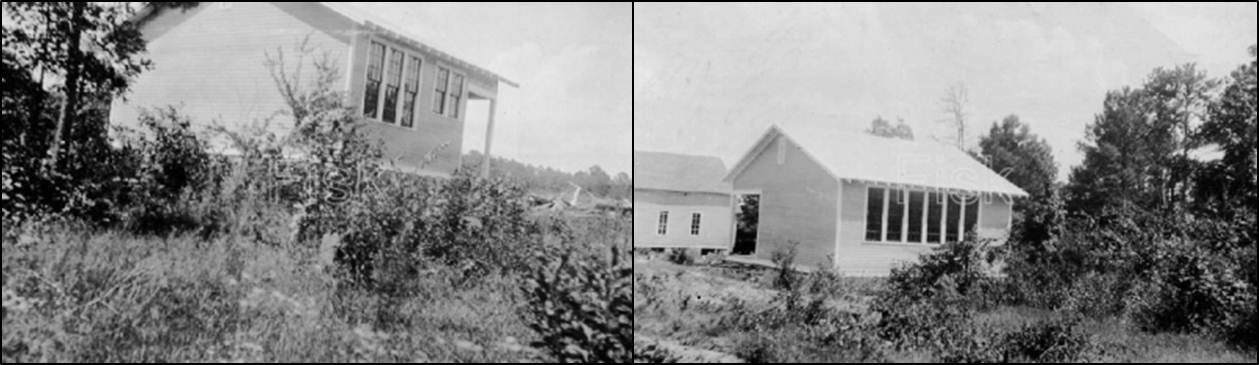
Hopewell Rosenwald School after construction in 1926-1927 school year. The building adjacent to the school is Hopewell Baptist Church. Photo found in Rosenwald Fund Card File Database, Fisk University Special Collections.

Between 2008 and 2010, I researched the last remaining Rosenwald School in McCormick County, South Carolina. I was lucky enough to meet a former student, Georgia Collier-Scott, who was very active in preserving the school-- which was built near the site of the old school and adjacent to Hopewell Baptist. Hopewell Rosenwald was an important additon to a rural community greatly in need. Collier-Scott was a student at the old schoolhouse as well as the new-- and she could still recall, with great clarity, the run-down condition of the old school, also called Hopewell:
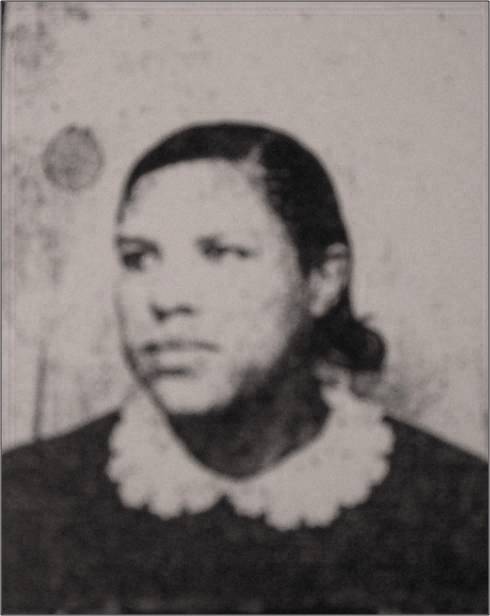
Collier-Scott as a young girl.
Courtesy of Collier-Scott.
“Hopewell school, as I remember it was a one room wood structure with one door facing what was then the main highway…with a window on each side facing each other, and a window in the back. It was not sealed, wooden benches served as seats for the students, and a wood burning stove furnished heat for the room. Three ten-inch boards nailed together and painted black, served as the blackboard…One teacher taught all subjects, and all grade levels.”


When the Rosenwald School Building Program started in 1912, its purpose was to solve issues of inadequate school facilities for rural black communities across the southeast. I'll save the topic of Rosenwald Schools for another post, but I will say that this program was founded in a time when public education funding for African Americans was basically non-existent in South Carolina and most of the southeast. A State Agent for Negro Schools was employed by the South Carolina Department of Education to inspect black schools and to advocate for their improvement. But black education remained an non-issue for many state officials. In my research, it isn't until the 1920's that I see true mention of any concern for the condition of African-American education in State Board of Education records. In a 1927 letter from the State High School Supervisor, J. Daniel, to the State Superintendent of Education, James H. Hope, Daniel stated that he was, "especially anxious to give the negro schools this year a rating and to keep a more accurate check than has heretofore been made." (This was excerpted from my National Register of Historic Places Nomination for Hopewell Rosenwald ).


From HistorySouth.org
The state and local school governments largely believed that the black communities should educate their own children and be responsible for a large amount of the funding. When the Rosenwald School Building Program was made available, new school facilities and funding were made available to replace older schools. To several black communities, the Building Program provided a schoolhouse where there had been none. Those communities were using private homes, churches, barns, and veritable shacks as schools. To Collier-Scott, when the Hopewell Rosenwald School was built (at the cost of $400), it wasn't just a new schoolhouse. It was a place where, "for the first time during our elementary school days we were warm and comfortable in school. We were in a learning atmosphere and were able to recieve a good elementary education." Hopewell Rosenwald School was a simple design that conformed to the One Teacher Community Plan (with small modifications). The schoolhouse contained three rooms: a large classroom, a small library/industrial room, and a storage closet. The large banking windows, common in most Rosewald Plans, were designed to let in the maximum amount of natural light.

Left to Right: Hopewell Rosenwald School ca. 1935-1952, SCDAH School Insurance Photographs and Hopewell in 2009 as listed in the National Register of Historic Places.
Hopewell Rosenwald School was accepted into the National Register of Historic Places in 2010. Today, it is still standing by Hopewell Baptist Church and is used as a community center. After her time at Hopewell, Collier-Scott graduated high school in Augusta, Georgia and attended college. After receiving her M.A., she became a teacher and retired after 37 years. Today, she is active in preserving the history of African-American education in McCormick County and she has created a scholarship fund. Collier-Scott recently was honored with a local award for her philanthropy and community involvement. She firmly believes, even now, that "All that I am and ever hope to be I owe it to Hopewell."